0 Comments

Nesting sites:

Tropical coastlines and islands across the world

Natural habitat:

Seas in topical and sub-tropical regions

Weight:

150 kg


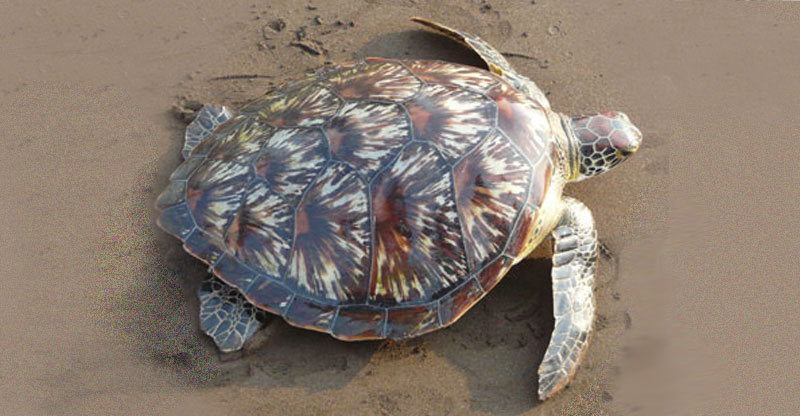
Carapace

Length: 80-100 cm

Shape: Egg shaped with variegated patterns on the rear. Four pairs with overlapping scutes

Colour: Olive brown, amber, and brownish patterns on the shell

Plastron: Yellowish white

Shape of the head: Beak-shaped nostril. Two pairs of prefrontal scales

Limbs: Oar-shaped limbs with two nails on each front limb

Food: Sponges, gastropods (animals with shells), jellyfish, marine grass, algae, etc.

Breeding season: Monsoon

Eggs deposition time: Diurnal and nocturnal

Frequency in a breeding season: 3-5

Duration between deposition of consecutive eggs: 12-14 days

Duration between two breeding seasons: 2-5 years

Number of eggs: 120-150

Incubation period: 50 -65 days


Current status: The species is endangered due to the consumption of its eggs, destruction of breeding habitats, and slaughter of adult turtles to make ornaments from their vertebrae. Protected under Schedule 1 of the Wildlife (Protection) Act, 1972
Share: Facebook Pinterest Linkedin Tweet

Nesting sites:

Tropical coastlines and islands across the world

Natural habitat:

Seas in topical and sub-tropical regions

Weight:

150 kg


Carapace

Length: 80-100 cm

Shape: Egg shaped with variegated patterns on the rear. Four pairs with overlapping scutes

Colour: Olive brown, amber, and brownish patterns on the shell

Plastron: Yellowish white

Shape of the head: Beak-shaped nostril. Two pairs of prefrontal scales

Limbs: Oar-shaped limbs with two nails on each front limb

Food: Sponges, gastropods (animals with shells), jellyfish, marine grass, algae, etc.

Breeding season: Monsoon

Eggs deposition time: Diurnal and nocturnal

Frequency in a breeding season: 3-5

Duration between deposition of consecutive eggs: 12-14 days

Duration between two breeding seasons: 2-5 years

Number of eggs: 120-150

Incubation period: 50 -65 days


Current status: The species is endangered due to the consumption of its eggs, destruction of breeding habitats, and slaughter of adult turtles to make ornaments from their vertebrae. Protected under Schedule 1 of the Wildlife (Protection) Act, 1972
Categories:

Related Posts

young vulture Vulture Conservation Article in Pakshimitra
As a part of “The Konkan Vulture Project” Sahyadri has been working awareness through various
खवले मांजर संरक्षण मोहिमेचा राष्ट्रीय स्तरावर गौरव
द हॅबिटाट ट्रस्ट, नवी दिल्ली या राष्ट्रीय पातळीवरील संवर्धन क्षेत्रात काम करणाऱ्या संस्थेच्या वतीने सह्याद्री
RZP Ghanekhunt
Before After
Six Classrooms
Before After